Foreign Currency Account
11 min read
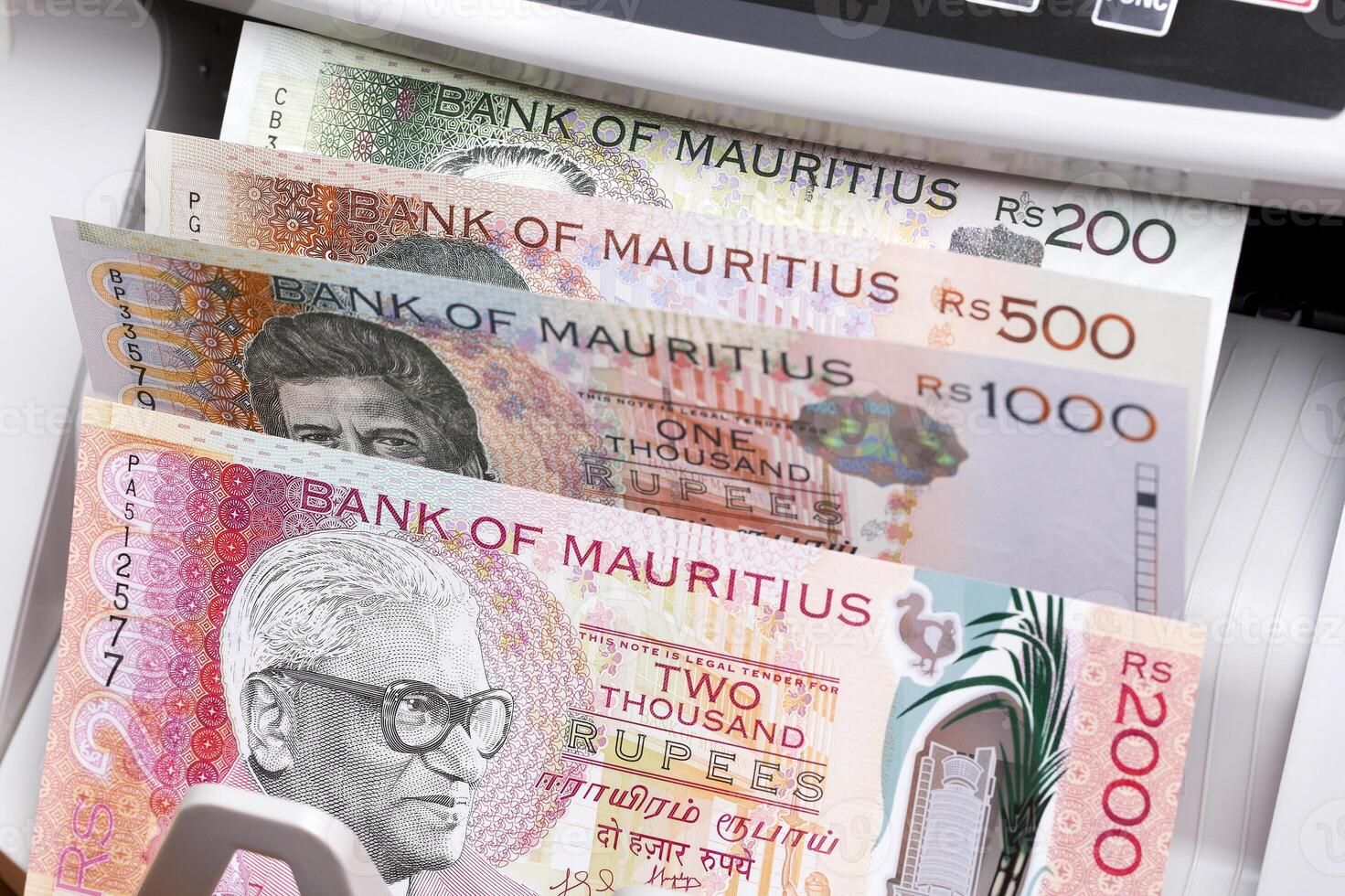
What Is a Foreign Currency Account and Why Does It Matter in Mauritius?
A foreign currency account is a bank account denominated in a currency other than the Mauritian rupee. In Mauritius, licensed banks can hold deposits in major currencies including USD, EUR, GBP, SGD, ZAR and others, allowing account holders to receive, hold and send funds without converting to rupees. For internationally mobile individuals, this is not a convenience feature but a practical necessity: property purchases under approved schemes must be funded in foreign currency, Occupation Permit applications require demonstrable foreign-currency investment, and many retirees and remote workers receive income in USD or EUR that they need to manage efficiently on the island.
Mauritius sits at the intersection of African, Asian and European financial flows. Its banking sector is regulated by the Bank of Mauritius and operates under a framework that distinguishes between residents and non-residents, between rupee accounts and foreign currency accounts, and between personal and corporate holdings. Understanding how those distinctions work saves you time, money and compliance headaches.
Who Can Open a Foreign Currency Account in Mauritius?
Both residents and non-residents can open foreign currency accounts at Mauritian banks, but the eligibility criteria, required documents and account types differ significantly depending on your status.
Non-Residents
A non-resident, for banking purposes, is broadly someone whose centre of economic interest is outside Mauritius. Non-residents can open non-resident foreign currency accounts. These accounts allow free repatriation of funds abroad, which is a key feature for investors who want to move capital in and out of the country without restriction. The Bank of Mauritius framework explicitly permits non-residents to hold foreign currency deposits and to remit the proceeds, including capital and income, freely.
Residents (Including Permit Holders)
Once you hold a valid Occupation Permit, Residence Permit or Premium Visa, you are treated as a resident for most banking purposes. Residents can hold both rupee accounts and foreign currency accounts. Resident foreign currency accounts are subject to some exchange control considerations, though Mauritius operates a largely liberalised exchange control regime. In practice, holders of Occupation Permits routinely maintain foreign currency accounts alongside rupee current accounts for day-to-day expenses.
Which Banks Offer Foreign Currency Accounts in Mauritius?
The main commercial banks operating in Mauritius that offer foreign currency accounts to individuals and businesses include:
- MCB (Mauritius Commercial Bank): The largest bank by assets. Offers multi-currency accounts for both residents and non-residents. Widely used by property buyers, Occupation Permit holders and retirees.
- SBM Bank (State Bank of Mauritius): Government-linked but commercially operated. Strong for African currency corridors and offers USD, EUR and GBP accounts.
- AfrAsia Bank: Positioned toward high-net-worth individuals and cross-border investors. Known for competitive foreign currency deposit rates and a streamlined onboarding process for non-residents.
- Absa Bank Mauritius: Part of the pan-African Absa Group. Useful for South African investors and those with ZAR income.
- MauBank: Smaller but accessible, with standard foreign currency account products.
- Bank One: A joint venture with a strong focus on international clients and multi-currency services.
Each bank sets its own minimum deposit requirements, monthly fees and documentation thresholds. AfrAsia and MCB are the most commonly used by foreign property buyers and Occupation Permit applicants, but the right choice depends on your nationality, the currencies you need and the complexity of your financial situation.
What Documents Do You Need?
Mauritius banks follow strict Know Your Customer (KYC) and Anti-Money Laundering (AML) requirements aligned with FATF standards. The exact list varies by bank and by your residency status, but the core documents are consistent across most institutions.
For Non-Residents
- Valid passport (certified copy, often notarised)
- Proof of address in your home country (utility bill or bank statement, typically no older than three months)
- Bank reference letter or recent statements from your existing bank (usually six to twelve months)
- Source of funds declaration, supported by evidence such as payslips, a sale agreement, investment statements or corporate accounts
- Tax identification number from your home country
- Completed bank application form
Some banks require an in-person visit for non-resident account opening; others now accept certified documents by post or via a local representative. AfrAsia, for example, has a more digitised onboarding process than some of its competitors, though in-person verification is still required at certain stages.
For Residents (Occupation Permit or Residence Permit Holders)
- Valid passport
- Copy of Occupation Permit, Residence Permit or Premium Visa
- Proof of Mauritian address (lease agreement, utility bill)
- Source of funds documentation
- Tax Identification Number issued by the Mauritius Revenue Authority (MRA)
If you are applying for an Occupation Permit at the same time as opening a bank account, note that some banks will open a temporary or provisional account to receive the initial investment transfer, which is then used as part of the EDB application. Confirm this process with your chosen bank and your legal adviser before committing to a sequence.
Foreign Currency Accounts and Property Ownership in Mauritius
Foreign nationals cannot buy freehold property in Mauritius freely. Acquisition by non-citizens is restricted to specific approved schemes, and the purchase price must be paid in foreign currency. This is where a foreign currency account becomes structurally important, not just convenient.
The Approved Schemes
The main routes through which a non-citizen can own residential property in Mauritius are:
- PDS (Property Development Scheme): Replaced the earlier IRS and RES schemes. Covers integrated residential developments with a minimum purchase price of USD 375,000. Purchasing at or above this threshold qualifies the buyer (and their dependants) for a Residence Permit.
- Smart City Scheme: Mixed-use developments combining residential, commercial and leisure components. Properties within Smart City schemes are available to non-citizens under similar rules to PDS.
- G+2 Scheme: Allows non-citizens to buy apartments in buildings of at least two upper floors (ground plus two). No minimum price threshold applies, but no automatic residence permit is granted.
- IHS (Invest Hotel Scheme): Allows purchase of hotel units that are managed by the hotel operator when not in personal use.
How the Foreign Currency Payment Works
When you buy under a PDS or Smart City scheme, the funds must arrive in Mauritius in foreign currency. The Bank of Mauritius requires that the purchase price be paid via a foreign currency account held at a Mauritian bank, or by direct inward remittance from abroad. The bank issues a confirmation of the inward transfer, which forms part of the documentation submitted to the EDB and the notary handling the deed of sale.
This means that opening a foreign currency account at a Mauritian bank is, in practice, a prerequisite for completing a property purchase under these schemes. You cannot simply wire rupees from a local account. The paper trail of foreign-currency inflow matters both for the property transaction and for any subsequent Residence Permit application.
Registration Duty and Land Transfer Tax
Under the Finance Act 2026, which came into force on 13 August 2026, non-citizens buying under PDS, Smart City, RES or G+2 schemes pay the standard 5% registration duty (borne by the buyer) and the seller pays 5% land transfer tax. An earlier increase to 10% introduced by the Finance Act 2025 was repealed, so the current rate for buyers is 5%. A separate 10% duty applies to the seller only on G+2 homes on State land or Pas Geometriques sold to a non-citizen.
First-time buyers benefit from registration duty relief on the first MUR 3 million of the purchase price for bare land, or the first MUR 6 million for a house or apartment. This relief applies to citizens and non-citizens alike, subject to the standard conditions. Always confirm the current rates and eligibility conditions with the MRA and your notary before signing a deed of sale, as property duty rules have changed more than once in recent years.
Tax Considerations for Foreign Currency Account Holders
Interest earned on foreign currency deposits held at Mauritian banks may be subject to Mauritian income tax if you are a tax resident in Mauritius. Mauritius uses a progressive personal income tax structure for the income year from 1 July 2026:
- 0% on the first MUR 500,000 of net income
- 10% on income between MUR 500,001 and MUR 1,000,000
- 20% on income between MUR 1,000,001 and MUR 12,000,000
- 35% on income above MUR 12,000,000
Mauritius has no capital gains tax and no inheritance or estate tax. This means that appreciation in the value of a foreign currency deposit, or a gain made when converting foreign currency to rupees, is not taxed as a capital gain. However, interest income is treated as ordinary income and falls within the progressive bands above.
For non-residents, interest on non-resident foreign currency accounts is generally exempt from Mauritian withholding tax, but you should confirm this with the MRA and take advice from a qualified tax professional in both Mauritius and your home country, particularly if your home country taxes worldwide income.
Mauritius has double taxation agreements (DTAs) with a significant number of countries. If you are a tax resident in Mauritius and earn foreign-source income deposited into your foreign currency account, the relevant DTA may affect how that income is taxed. The MRA publishes the list of active DTAs on its official website.
Managing a Foreign Currency Account Alongside an Occupation Permit
The Occupation Permit (Investor category) requires a minimum initial investment of USD 100,000. This investment must be demonstrably brought into Mauritius in foreign currency, and a foreign currency account at a local bank is the standard vehicle for doing so. The funds are transferred from abroad, received into the foreign currency account, and then deployed into the Mauritian business entity.
The Occupation Permit (Professional category) requires a minimum monthly salary of MUR 50,000. Professionals employed by Mauritian companies are typically paid in rupees, but many also maintain a foreign currency account to manage savings, receive consulting fees from overseas clients, or hold reserves in a more stable currency.
Occupation Permits are valid for ten years and are renewable. During that period, maintaining a foreign currency account at a reputable Mauritian bank helps demonstrate ongoing economic ties to the island, which can be relevant at renewal.
Practical Tips Before You Open an Account
Get your source of funds documentation in order before you approach a bank. The most common reason for delays is incomplete or poorly organised evidence of where the money came from. Bank statements, payslips, a sale agreement for a property you have sold, or audited company accounts all work, but they need to tell a coherent story.
Choose a bank that matches your profile. If you are a South African buying a PDS villa, Absa or SBM may offer the smoothest ZAR-to-MUR corridor. If you are a European retiree receiving a EUR pension, MCB or AfrAsia may be better suited. Ask each bank about their correspondent banking relationships for your specific currency pair.
Understand the fee structure. Foreign currency accounts often carry monthly maintenance fees, minimum balance requirements and transaction charges for international wires. These vary considerably between banks and between account tiers. A high-net-worth account at AfrAsia will have a different fee structure from a standard account at MauBank.
Keep your KYC documents current. Mauritian banks are required to refresh KYC periodically. If your passport expires, your address changes or your permit is renewed, notify your bank promptly. Stale KYC is a common reason for accounts being frozen or transactions being delayed.
Coordinate with your notary and the EDB. If the account is being opened specifically to fund a property purchase or an Occupation Permit application, loop in your notary and your EDB adviser early. They will tell you exactly what confirmation letters and transfer documentation you need from the bank, and in what format.
Summary
A foreign currency account in Mauritius is the financial backbone of almost every significant cross-border transaction on the island, from buying property under an approved scheme to funding an Investor Occupation Permit to managing offshore income as a tax resident. The banking infrastructure is solid, the regulatory framework is transparent, and the process is manageable if you prepare the right documents in the right sequence. The variables that most often cause problems are KYC documentation gaps, mismatched source-of-funds narratives, and not coordinating the bank account opening with the broader property or permit process. Get those three things right and the rest follows logically.
Frequently asked questions
Can a non-resident open a foreign currency account in Mauritius without visiting the island?
Some Mauritian banks, including AfrAsia, allow non-residents to begin the account opening process remotely using certified and notarised documents. However, most banks require at least one in-person visit for identity verification before the account becomes fully operational. Confirm the specific requirements with your chosen bank before travelling.
Do I need a foreign currency account to buy property in Mauritius as a foreigner?
Yes, in practice. Property purchases under approved schemes such as PDS and Smart City must be funded by foreign currency inflows. The Bank of Mauritius requires that the purchase price arrive in Mauritius as a foreign currency transfer, and a foreign currency account at a local bank is the standard mechanism for receiving and evidencing that transfer.
What currencies can I hold in a foreign currency account in Mauritius?
Major Mauritian banks offer accounts in USD, EUR, GBP, SGD, ZAR, CHF, AUD and several other currencies. The exact list of supported currencies varies by bank. USD and EUR are the most widely available and the most commonly used for property transactions.
Is interest earned on a foreign currency account taxed in Mauritius?
For tax residents of Mauritius, interest income is subject to the progressive personal income tax: 0% on the first MUR 500,000, 10% up to MUR 1,000,000, 20% up to MUR 12,000,000, and 35% above that. For non-residents, interest on non-resident foreign currency accounts is generally exempt from Mauritian withholding tax, but you should confirm this with the Mauritius Revenue Authority and a qualified tax adviser.
What is the minimum investment required for an Investor Occupation Permit in Mauritius?
The minimum initial investment for an Investor Occupation Permit is USD 100,000. This amount must be brought into Mauritius in foreign currency and invested in the applicant's Mauritian business entity. The permit is valid for ten years and is renewable.
What registration duty does a non-citizen pay when buying property in Mauritius?
Under the Finance Act 2026 (in force from 13 August 2026), non-citizens buying under PDS, Smart City, RES or G+2 schemes pay the standard 5% registration duty. The seller pays 5% land transfer tax. An earlier 10% rate introduced in 2025 was repealed. Always confirm current rates with the Mauritius Revenue Authority before signing a deed of sale.
Does Mauritius have capital gains tax on foreign currency gains?
No. Mauritius has no capital gains tax. Gains arising from the appreciation of foreign currency holdings or from currency conversion are not taxed as capital gains. However, interest income earned on deposits is treated as ordinary income and is subject to the progressive personal income tax for tax residents.
Which Mauritian bank is best for a foreign currency account?
There is no single best bank; the right choice depends on your nationality, the currencies you need, your transaction volumes and your relationship with the bank. MCB and AfrAsia are the most commonly used by international property buyers and Occupation Permit holders. Absa is often preferred by South African investors. Compare fee structures, minimum balances and correspondent banking relationships before deciding.
Related guides
Keep reading
Enjoyed this article?
Get new guides and practical relocation news from Mauritius Relo in your inbox.