Pereybere: Village Life and Living Guide
9 min read
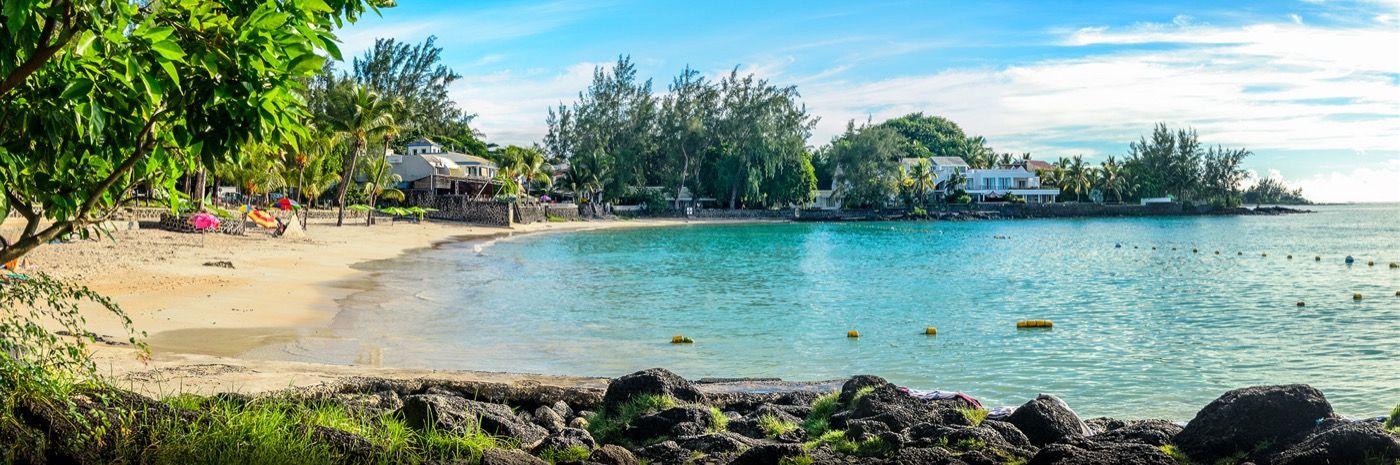
Pereybere is a small coastal village on the northern tip of Mauritius, roughly 3 kilometres north of Grand Baie. It sits along a calm, reef-protected bay with a public beach that locals and long-term residents consistently rate among the most accessible and genuinely pleasant on the island. Unlike the more developed resort strips nearby, Pereybere has kept a neighbourhood feel: small guesthouses alongside private villas, a handful of good restaurants, a lively public beach park, and a mix of Mauritian families, retirees, and working expats who have chosen to stay.
For anyone researching where to base themselves in Mauritius, Pereybere deserves serious consideration. It offers proximity to the international airport road network, the commercial hub of Grand Baie, and the administrative centre of Port Louis, without the noise and tourist density that can make some northern villages feel impersonal.
What Pereybere Is Actually Like
The village centres on its public beach, a roughly 300-metre arc of white sand bordered by casuarina trees and a grassy park. Entry is free. The beach is managed by the municipality and cleaned regularly, which makes it noticeably tidier than some privately adjacent stretches elsewhere on the island. The water is shallow and calm inside the reef, making it practical for families with children and for swimming year-round.
The road running parallel to the beach (Royal Road) carries a reasonable amount of through traffic during peak hours, but the side streets behind it are quiet. The village has a small supermarket, a pharmacy, a bakery, fish stalls near the beach, and enough everyday infrastructure that residents rarely need to drive far for routine errands. Grand Baie's larger supermarkets, banks, and medical facilities are a short drive south.
Pereybere does not have a marina or a casino. It does not have a large hotel. That is, for many people, exactly the point.
The Beach and the Sea
The Pereybere beach lagoon is protected by a coral reef that keeps wave action minimal. Snorkelling is possible directly from the beach, and glass-bottom boat operators and kayak hire are available from vendors on the sand. The reef is not pristine by global standards, but fish life is present and the water clarity is good on calm days.
The beach gets busy on weekends and during Mauritian school holidays, when it functions as a genuine community gathering space. Barbecues, music, and family groups are normal on a Saturday afternoon. Weekday mornings are quiet enough that you may have a long stretch to yourself.
Seasonal variation matters. The austral summer (November through April) brings warmer water, occasional heavy rain, and the risk of cyclones. The lagoon remains swimmable through most weather events, but the beach park can flood briefly after intense rainfall. The austral winter (May through October) is drier, cooler, and consistently comfortable, with water temperatures that most Europeans find ideal.
Daily Life and Local Services
Pereybere functions as a residential village rather than a resort node. This means you will find a butcher, a vegetable stall, a hardware shop, and a Chinese-run general store within walking distance of most addresses. The informal economy is active: fresh fish is sold from the roadside in the early morning, and local vendors cycle through the streets with bread and produce.
Public bus services connect Pereybere to Grand Baie and onward to Port Louis via the northern coastal route. Journey times are longer than driving, but the service is regular and inexpensive. Most residents and long-term expats drive or use ride-hailing apps for anything beyond a short walk.
Medical care at village level means a pharmacy and a general practitioner. For anything more complex, the nearest private clinic options are in Grand Baie and Triolet. The public hospital for the north is in Poudre d'Or Hamlet. Expats with private health insurance typically use the network of private clinics across the north.
Pereybere for Expats and Long-Term Residents
Pereybere has attracted a steady population of French, South African, German, and British long-term residents over the past two decades. The northern coast as a whole is the most internationally diverse part of Mauritius, and Pereybere sits comfortably within that corridor. French is widely spoken alongside Mauritian Creole, and English is understood in most commercial settings.
The village suits people who want to be near the beach without living inside a resort development, who value a mixed local-expat community, and who do not need to commute to Port Louis daily. Remote workers and retirees are the most common profiles among foreign residents.
Renting and Buying Property in Pereybere
The Pereybere rental market ranges from small apartments above local shops to larger villas with gardens and pools on the quieter streets behind the beach. Rental prices vary considerably by condition, furnishing, and proximity to the water. Because this is a residential market rather than a resort market, you can often negotiate longer-term leases at better rates than the short-term holiday rental market suggests.
For buying, non-citizens face a specific legal framework. Foreign nationals cannot buy freehold residential property on the open market in Mauritius. They can acquire property through approved government schemes such as the Property Development Scheme (PDS) or Smart City developments. A minimum investment of USD 375,000 under an approved scheme also qualifies the buyer and their dependants for a residence permit, which is a meaningful benefit for those planning to live here long-term.
Property transfer costs under the current rules (Finance Act 2026, in force from 13 August 2026) mean that non-citizens buying through PDS, Smart City, RES, or G+2 schemes pay 5% registration duty as the buyer, and the seller pays 5% land transfer tax. Always confirm current figures with the Economic Development Board and seek independent legal advice before committing to any purchase. To search available properties in and around Pereybere, visit PropertyFinder Mauritius, which lists approved scheme units as well as rental stock.
Tax Considerations for Residents
Mauritius operates a progressive personal income tax system. For the income year from 1 July 2026, the bands are: 0% on the first MUR 500,000; 10% on income between MUR 500,001 and MUR 1,000,000; 20% on income between MUR 1,000,001 and MUR 12,000,000; and 35% on income above MUR 12,000,000. There is no capital gains tax and no inheritance or estate tax in Mauritius. These are meaningful advantages for retirees and investors comparing Mauritius with European or South African tax residency.
VAT in Mauritius is 15%, and the corporate tax rate is also 15%, but these are separate from personal income tax. Always confirm your personal tax position with a qualified Mauritian tax adviser and the Mauritius Revenue Authority (MRA).
For a broader overview of visas, permits, and tax structures, the Mauritius Relocation Guides section covers the full framework in detail.
Getting to and Around Pereybere
Sir Seewoosagur Ramgoolam International Airport is located in the south-east of the island, approximately 65 to 70 kilometres from Pereybere by road. The drive takes between 60 and 90 minutes depending on traffic, with the motorway covering most of the distance. Taxis and pre-booked transfers are the standard arrival option; there is no rail connection.
Within the north, Pereybere is well-placed. Grand Baie is 5 minutes by car. Cap Malheureux, the northernmost point of the island and departure point for boat trips to the offshore islands of Coin de Mire and Flat Island, is about 10 minutes north. The town of Goodlands and the eastern coast are accessible in under 30 minutes.
Driving in Mauritius is on the left, and the northern road network is straightforward once you know the main routes. Traffic congestion builds on the Royal Road between Grand Baie and Pereybere during morning and evening peaks, particularly on weekdays when people commute toward Port Louis.
Eating and Socialising in Pereybere
The restaurant scene in Pereybere is small but reliable. Several beachside restaurants serve grilled fish, seafood, and Creole dishes. The quality of fresh fish is consistently high given the proximity to local fishing activity. Prices are moderate by island standards, and the setting of eating directly beside the lagoon is a genuine draw.
Beyond the beach restaurants, the village has a few Chinese restaurants, a pizza place, and a small number of cafes. For a wider range of dining, Grand Baie is the obvious destination: it has the island's densest concentration of restaurants, bars, and supermarkets, and the drive takes under ten minutes.
The social life for expats in Pereybere tends to revolve around the beach, informal gatherings at homes, and the wider Grand Baie social circuit. There are no clubs or large entertainment venues in the village itself. This suits residents who are looking for a quieter base and who socialise through personal networks rather than venues.
Is Pereybere Right for You
Pereybere works well for people who have already decided on the northern coast of Mauritius and want a residential village rather than a resort address. It is practical for retirees, remote workers, and families with school-age children (several international schools operate in the Grand Baie corridor). It is less suited to people who need to commute daily to Port Louis, though it is not impossible.
The village does not offer the prestige address of some gated estate communities, nor the amenities of a large resort. What it does offer is a functioning, mixed community with a genuinely good public beach, reasonable local infrastructure, and easy access to the wider north.
If you are comparing Pereybere with other northern villages such as Grand Baie, Cap Malheureux, or Trou aux Biches, the key distinction is scale and character. Pereybere is smaller and quieter than Grand Baie, more convenient than Cap Malheureux for daily services, and slightly more residential in feel than Trou aux Biches.
For a comprehensive view of what relocating to Mauritius involves, including visa options, cost of living, and how to structure your move by nationality, the Moving to Mauritius: The Relocation Atlas is a practical starting point. If you want to compare notes from people who have already made the move, the Relocation Blog covers real experiences across different parts of the island.
Questions fréquentes
Where exactly is Pereybere in Mauritius?
Pereybere is a coastal village on the northern tip of Mauritius, approximately 3 kilometres north of Grand Baie along the Royal Road. It sits on a calm, reef-protected bay and is part of the Riviere du Rempart district.
Is Pereybere beach suitable for swimming year-round?
Yes. The lagoon at Pereybere is protected by a coral reef that keeps the water calm and shallow, making it suitable for swimming throughout the year. Water is warmest between November and April; the May to October dry season offers clearer skies and cooler but comfortable conditions.
Can foreigners buy property in Pereybere?
Non-citizens cannot buy freehold residential property on the open Mauritian market. They can purchase through approved government schemes such as the Property Development Scheme (PDS) or Smart City developments, with a minimum investment threshold of USD 375,000 that also qualifies the buyer for a residence permit.
How far is Pereybere from the airport?
Sir Seewoosagur Ramgoolam International Airport is roughly 65 to 70 kilometres from Pereybere by road, and the drive typically takes between 60 and 90 minutes depending on traffic.
What is the tax situation for expats living in Pereybere?
Residents of Mauritius pay progressive personal income tax: 0% on the first MUR 500,000 of income, 10% on the next band up to MUR 1,000,000, 20% up to MUR 12,000,000, and 35% above that. There is no capital gains tax and no inheritance tax. Confirm your personal position with a qualified adviser and the Mauritius Revenue Authority.
Guides associés
À lire ensuite
Cet article vous a plu ?
Recevez par e-mail les nouveaux guides et l'actualité pratique de l'expatriation signés Mauritius Relo.